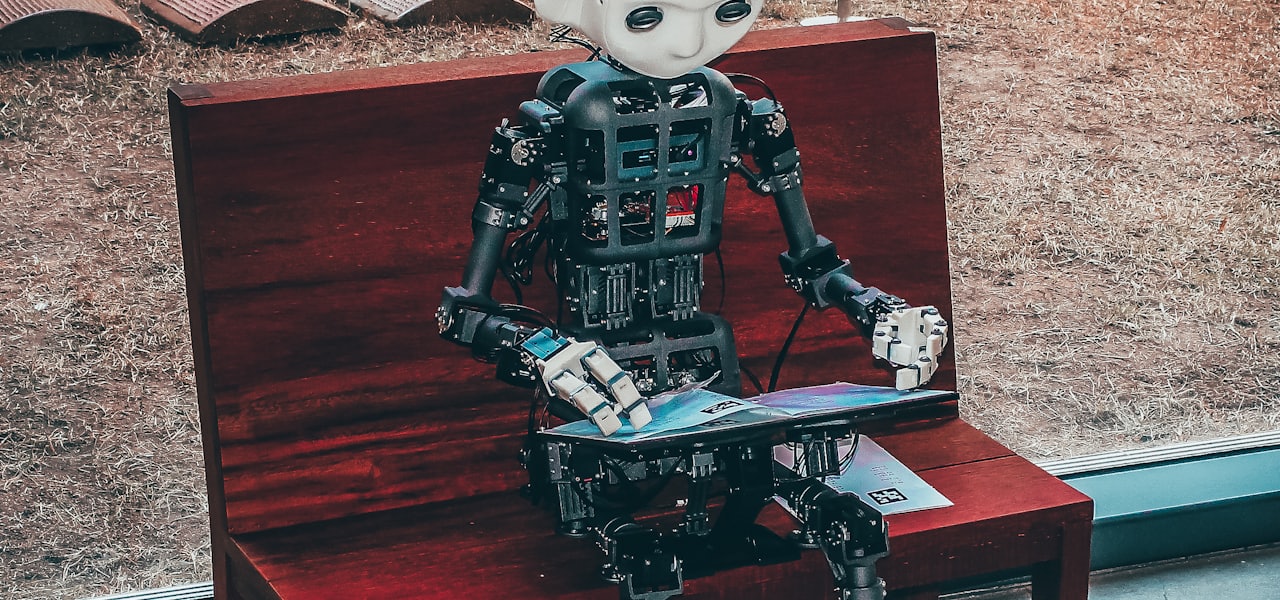
AI Coding Ide

AI Coding Ide — independent reviews, comparisons, pricing and step-by-step guides on Aizhi.

  • Description logic

    Description logic

    Description logics (DL) are a family of formal knowledge representation languages. Many DLs are more expressive than propositional logic but less expressive than first-order logic. In contrast to the latter, the core reasoning problems for DLs are (usually) decidable, and efficient decision procedures have been designed and implemented for these problems. There are general, spatial, temporal, spatiotemporal, and fuzzy description logics, and each description logic features a different balance between expressive power and reasoning complexity by supporting different sets of mathematical constructors. DLs are used in artificial intelligence to describe and reason about the relevant concepts of an application domain (known as terminological knowledge). It is of particular importance in providing a logical formalism for ontologies and the Semantic Web: the Web Ontology Language (OWL) and its profiles are based on DLs. A major area of application of DLs and OWL is in biomedical informatics, where they assist in the codification of biomedical knowledge. DLs and OWL are also applied in other domains, including defense, climate modeling, and large-scale industrial knowledge graphs. == Introduction == A DL models concepts, roles and individuals, and their relationships. The fundamental modeling concept of a DL is the axiom—a logical statement relating roles and/or concepts. This is a key difference from the frames paradigm where a frame specification declares and completely defines a class. == Nomenclature == === Terminology compared to FOL and OWL === The description logic community uses different terminology than the first-order logic (FOL) community for operationally equivalent notions; some examples are given below. The Web Ontology Language (OWL) uses again a different terminology, also given in the table below. === Naming convention === There are many varieties of description logics and there is an informal naming convention, roughly describing the operators allowed. The expressivity is encoded in the label for a logic starting with one of the following basic logics: Followed by any of the following extensions: ==== Exceptions ==== Some canonical DLs that do not exactly fit this convention are: ==== Examples ==== As an example, A L C {\displaystyle {\mathcal {ALC}}} is a centrally important description logic from which comparisons with other varieties can be made. A L C {\displaystyle {\mathcal {ALC}}} is simply A L {\displaystyle {\mathcal {AL}}} with complement of any concept allowed, not just atomic concepts. A L C {\displaystyle {\mathcal {ALC}}} is used instead of the equivalent A L U E {\displaystyle {\mathcal {ALUE}}} . A further example, the description logic S H I Q {\displaystyle {\mathcal {SHIQ}}} is the logic A L C {\displaystyle {\mathcal {ALC}}} plus extended cardinality restrictions, and transitive and inverse roles. The naming conventions aren't purely systematic so that the logic A L C O I N {\displaystyle {\mathcal {ALCOIN}}} might be referred to as A L C N I O {\displaystyle {\mathcal {ALCNIO}}} and other abbreviations are also made where possible. The Protégé ontology editor supports S H O I N ( D ) {\displaystyle {\mathcal {SHOIN}}^{\mathcal {(D)}}} . Three major biomedical informatics terminology bases, SNOMED CT, GALEN, and GO, are expressible in E L {\displaystyle {\mathcal {EL}}} (with additional role properties). OWL 2 provides the expressiveness of S R O I Q ( D ) {\displaystyle {\mathcal {SROIQ}}^{\mathcal {(D)}}} , OWL-DL is based on S H O I N ( D ) {\displaystyle {\mathcal {SHOIN}}^{\mathcal {(D)}}} , and for OWL-Lite it is S H I F ( D ) {\displaystyle {\mathcal {SHIF}}^{\mathcal {(D)}}} . == History == Description logic was given its current name in the 1980s. Previous to this it was called (chronologically): terminological systems, and concept languages. === Knowledge representation === Frames and semantic networks lack formal (logic-based) semantics. DL was first introduced into knowledge representation (KR) systems to overcome this deficiency. The first DL-based KR system was KL-ONE (by Ronald J. Brachman and Schmolze, 1985). During the '80s other DL-based systems using structural subsumption algorithms were developed including KRYPTON (1983), LOOM (1987), BACK (1988), K-REP (1991) and CLASSIC (1991). This approach featured DL with limited expressiveness but relatively efficient (polynomial time) reasoning. In the early '90s, the introduction of a new tableau based algorithm paradigm allowed efficient reasoning on more expressive DL. DL-based systems using these algorithms — such as KRIS (1991) — show acceptable reasoning performance on typical inference problems even though the worst case complexity is no longer polynomial. From the mid '90s, reasoners were created with good practical performance on very expressive DL with high worst case complexity. Examples from this period include FaCT, RACER (2001), CEL (2005), and KAON 2 (2005). DL reasoners, such as FaCT, FaCT++, RACER, DLP and Pellet, implement the method of analytic tableaux. KAON2 is implemented by algorithms which reduce a SHIQ(D) knowledge base to a disjunctive datalog program. === Semantic web === The DARPA Agent Markup Language (DAML) and Ontology Inference Layer (OIL) ontology languages for the Semantic Web can be viewed as syntactic variants of DL. In particular, the formal semantics and reasoning in OIL use the S H I Q {\displaystyle {\mathcal {SHIQ}}} DL. The DAML+OIL DL was developed as a submission to—and formed the starting point of—the World Wide Web Consortium (W3C) Web Ontology Working Group. In 2004, the Web Ontology Working Group completed its work by issuing the OWL recommendation. The design of OWL is based on the S H {\displaystyle {\mathcal {SH}}} family of DL with OWL DL and OWL Lite based on S H O I N ( D ) {\displaystyle {\mathcal {SHOIN}}^{\mathcal {(D)}}} and S H I F ( D ) {\displaystyle {\mathcal {SHIF}}^{\mathcal {(D)}}} respectively. The W3C OWL Working Group began work in 2007 on a refinement of - and extension to - OWL. In 2009, this was completed by the issuance of the OWL2 recommendation. OWL2 is based on the description logic S R O I Q ( D ) {\displaystyle {\mathcal {SROIQ}}^{\mathcal {(D)}}} . Practical experience demonstrated that OWL DL lacked several key features necessary to model complex domains. == Modeling == === TBox vs Abox === In DL, a distinction is drawn between the so-called TBox (terminological box) and the ABox (assertional box). In general, the TBox contains sentences describing concept hierarchies (i.e., relations between concepts) while the ABox contains ground sentences stating where in the hierarchy, individuals belong (i.e., relations between individuals and concepts). For example, the statement: belongs in the TBox, while the statement: belongs in the ABox. Note that the TBox/ABox distinction is not significant, in the same sense that the two "kinds" of sentences are not treated differently in first-order logic (which subsumes most DL). When translated into first-order logic, a subsumption axiom like (1) is simply a conditional restriction to unary predicates (concepts) with only variables appearing in it. Clearly, a sentence of this form is not privileged or special over sentences in which only constants ("grounded" values) appear like (2). === Motivation for having Tbox and Abox === So why was the distinction introduced? The primary reason is that the separation can be useful when describing and formulating decision-procedures for various DL. For example, a reasoner might process the TBox and ABox separately, in part because certain key inference problems are tied to one but not the other one ('classification' is related to the TBox, 'instance checking' to the ABox). Another example is that the complexity of the TBox can greatly affect the performance of a given decision-procedure for a certain DL, independently of the ABox. Thus, it is useful to have a way to talk about that specific part of the knowledge base. The secondary reason is that the distinction can make sense from the knowledge base modeler's perspective. It is plausible to distinguish between our conception of terms/concepts in the world (class axioms in the TBox) and particular manifestations of those terms/concepts (instance assertions in the ABox). In the above example: when the hierarchy within a company is the same in every branch but the assignment to employees is different in every department (because there are other people working there), it makes sense to reuse the TBox for different branches that do not use the same ABox. There are two features of description logic that are not shared by most other data description formalisms: DL does not make the unique name assumption (UNA) or the closed-world assumption (CWA). Not having UNA means that two concepts with different names may be allowed by some inference to be shown to be equivalent. Not having CWA, or rather having the open world assumption (OWA) means that

    Read more →
  • Oracle Cloud Platform

    Oracle Cloud Platform

    Oracle Cloud Platform refers to a Platform as a Service (PaaS) offerings by Oracle Corporation as part of Oracle Cloud Infrastructure. These offerings are used to build, deploy, integrate and extend applications in the cloud. The offerings support a variety of programming languages, databases, tools and frameworks including Oracle-specific, open source and third-party software and systems. == Deployment models == Oracle Cloud Platform offers public, private and hybrid cloud deployment models. == Architecture == Oracle Cloud Platform provides both Infrastructure as a Service (IaaS) and Platform as a Service (PaaS). The infrastructure is offered through a global network of Oracle managed data centers. Oracle deploys their cloud in Regions. Inside each Region are at least three fault-independent Availability Domains. Each of these Availability Domains contains an independent data center with power, thermal and network isolation. Oracle Cloud is generally available in North America, EMEA, APAC and Japan with announced South America and US Govt. regions coming soon.

    Read more →
  • Cloudflare

    Cloudflare

    Cloudflare, Inc., is an American technology company headquartered in San Francisco, California, that provides a range of internet services, including content delivery network (CDN) services, cloud cybersecurity, DDoS mitigation, and ICANN-accredited domain registration. The company's services act primarily as a reverse proxy between website visitors and a customer's hosting provider, improving performance and protecting against malicious traffic. Cloudflare was founded in 2009 by Matthew Prince, Lee Holloway, and Michelle Zatlyn. The company went public on the New York Stock Exchange in 2019 under the ticker symbol NET. Cloudflare has since expanded its offerings to include edge computing through its Workers platform, a public DNS resolver (1.1.1.1), and a VPN-like service known as WARP. In recent years, the company has integrated artificial intelligence into its infrastructure, acquiring companies such as Replicate and launching tools to manage AI bots and scrapers. According to W3Techs, Cloudflare is used by approximately 21.3% of all websites on the Internet as of January 2026. The company has been the subject of controversy regarding its policy of content neutrality. While Cloudflare executives have historically advocated for remaining a neutral infrastructure provider, the company has terminated services for specific high-profile websites associated with hate speech and violence, including The Daily Stormer, 8chan, and Kiwi Farms, following significant public pressure. Cloudflare has also faced criticism and litigation regarding copyright infringement by websites using its services, notably losing a lawsuit against Japanese publishers in 2025. The company experienced significant global outages in late 2025 which disrupted services for major platforms internationally. == History == Cloudflare was founded on July 26, 2009, by Matthew Prince, Lee Holloway, and Michelle Zatlyn. Prince and Holloway had previously collaborated on Project Honey Pot, a product of Unspam Technologies that partly inspired the basis of Cloudflare. In 2009, the company was venture-capital funded. On August 15, 2019, Cloudflare submitted its S-1 filing for an initial public offering on the New York Stock Exchange under the stock ticker NET. It opened for public trading on September 13, 2019, at $15 per share. According to the company, the name 'Cloudflare' was chosen, over the initial 'WebWall', because it best described what they were trying to do: build a "firewall in the cloud." In 2020, Cloudflare co-founder and COO Michelle Zatlyn was named president. Cloudflare has acquired web-services and security companies, including StopTheHacker (February 2014), CryptoSeal (June 2014), Eager Platform Co. (December 2016), Neumob (November 2017), S2 Systems (January 2020), Linc (December 2020), Zaraz (December 2021), Vectrix (February 2022), Area 1 Security (February 2022), Nefeli Networks (March 2024), BastionZero (May 2024), and Kivera (October 2024). Replicate (November 2025), and Human Native (January 2026). Since at least 2017, Cloudflare has used a wall of lava lamps at its San Francisco headquarters as a source of randomness for encryption keys, alongside double pendulums at its London offices and a Geiger counter at its Singapore offices. The lava lamp installation implements the Lavarand method, where a camera transforms the unpredictable shapes of the "lava" blobs into a digital image. In Q4 2022, Cloudflare provided paid services to 162,086 customers. In October 2024, Cloudflare won a lawsuit against patent troll Sable Networks. Sable paid Cloudflare $225,000, granted it a royalty-free license to its patent portfolio, and dedicated its patents to the public by abandoning its patent rights. In November 2025, it was announced Cloudflare had agreed to acquire Replicate, a San Francisco–based platform that enables software developers to run, fine-tune, and deploy open-source machine-learning models via an API without managing infrastructure. In January 2026, Cloudflare released an analysis regarding BGP routing leaks observed from the Venezuelan state-owned ISP CANTV (AS8048), which occurred on January 2 coincides with the arrest of Nicolás Maduro. While some security researchers had speculated that the outages were linked to U.S. cyber operations, Cloudflare's data indicated that the anomalies were consistent with a pattern of "insufficient routing export and import policies" by the ISP rather than malicious external interference. In January 2026, Cloudflare acquired Human Native, an AI data marketplace that brokers transactions between developers and content creators, for an undisclosed amount. On January 16, 2026, Cloudflare acquired The Astro Technology Company, the developers behind the open-source web framework Astro. In May 2026, Cloudflare announced the elimination of approximately 1,100 positions, around 20 percent of its workforce, in a restructuring the company attributed to the rapid adoption of artificial intelligence tools. The announcement coincided with the company's first-quarter 2026 earnings, which reported a record $639.8 million in quarterly revenue, a 34 percent year-over-year increase. CEO Matthew Prince stated the cuts were not driven by performance concerns but reflected roles made obsolete by AI, and that Cloudflare expected to employ more people by the end of 2027 than at any point during 2026. == Products == Cloudflare provides network and security products for consumers and businesses, utilizing edge computing, reverse proxies for web traffic, data center interconnects, and a content distribution network to serve content across its network of servers. It supports transport layer protocols TCP, UDP, QUIC, and many application layer protocols such as DNS over HTTPS, SMTP, and HTTP/2 with support for HTTP/2 Server Push. As of 2023, Cloudflare handles an average of 45 million HTTP requests per second. As of 2024, Cloudflare servers are powered by AMD EPYC 9684X processors. Cloudflare also provides analysis and reports on large-scale outages, including Verizon's October 2024 outage. === Artificial intelligence === In 2023, Cloudflare launched "Workers AI", a framework allowing for use of Nvidia GPU's within Cloudflare's network. In 2024, Cloudflare launched a tool that prevents bots from scraping websites. To build automatic bot detector models, the company analyzed "AI" bots and crawler traffic. The company also launched an "AI" assistant to generate charts based on queries by leveraging "Workers AI". Cloudflare announced plans in September 2024 to launch a marketplace where website owners can sell "AI" model providers access to scrape their site's content. In March 2025, Cloudflare announced a new feature called "AI Labyrinth", which combats unauthorized "AI" data scraping by serving fake "AI"-generated content to LLM bots. In July, the company rolled out a permission-based setting to allow websites to automatically block online bots from scraping data and content. Cloudflare released AutoRAG into beta in 2025. AutoRAG (retrieval augmented generation) creates a vector database of a website's unstructured content to identify relationships between concepts. It is part of an initiative with Microsoft, alongside their NLWeb standard, to make websites easier for people and automated systems to query. Cloudflare and GoDaddy partnered in April 2026 to enable AI Crawl Control features on GoDaddy hosted websites. This would allow site owners to decide how AI bot crawlers interact with their content. === DDoS mitigation === Cloudflare provides free and paid DDoS mitigation services that protect customers from distributed denial of service (DDoS) attacks. Cloudflare received media attention in June 2011 for providing DDoS mitigation for the website of LulzSec, a black hat hacking group. In March 2013, The Spamhaus Project was targeted by a DDoS attack that Cloudflare reported exceeded 300 gigabits per second (Gbit/s). Patrick Gilmore, of Akamai, stated that at the time it was "the largest publicly announced DDoS attack in the history of the Internet". While trying to defend Spamhaus against the DDoS attacks, Cloudflare ended up being attacked as well; Google and other companies eventually came to Spamhaus' defense and helped it to absorb the unprecedented amount of attack traffic. In 2014, Cloudflare began providing free DDoS mitigation for artists, activists, journalists, and human rights groups under the name "Project Galileo". In 2017, it extended the service to electoral infrastructure and political campaigns under the name "Athenian Project". By 2025, more than 2,900 users and organizations were participating in Project Galileo, including 31 US states. In February 2014, Cloudflare claimed to have mitigated an NTP reflection attack against an unnamed European customer, which it stated peaked at 400 Gbit/s. In November 2014, it reported a 500 Gbit/s DDoS attack in Hong Kong. In July 2021, the company claimed to have absorbed a DDoS atta

    Read more →
  • List of Java software and tools

    List of Java software and tools

    This is a list of software and programming tools for the Java programming language, which includes frameworks, libraries, IDEs, build tools, application servers, and related projects. == Java frameworks == == Libraries == Apache Ant – build automation tool Apache Batik – SVG processing Apache Cayenne – object-relational mapping Apache Xerces – collection of software libraries for parsing, validating, serializing and manipulating XML. Applet – applet API Ardor3D – 3D graphics engine Bonita BPM – workflow engine Cassowary – constraint solving Checkstyle – static code analysis GNU Classpath – standard library implementation Colt – scientific computing and technical computing Commons Daemon – manages applications as daemons DESMO-J – discrete event simulation Diagrams.net – diagramming Disruptor – high-performance messaging Dom4j – XML processing Dynamic Languages Toolkit – support for dynamic programming languages on the JVM Echo – GUI Flying Saucer – XHTML/CSS rendering Formatting Objects Processor – XSL-FO to PDF H2 Database Engine – relational database IAIK-JCE – cryptography Internet Foundation Classes – legacy GUI JavaBeans – reusable component architecture for enabling encapsulation, events, and properties for software components JavaCC – open-source parser generator and lexical analyzer Java Class Library – standard library of Java and other JVM languages Java Native Access – provides Java programs easy access to native shared libraries without using the Java Native Interface Javolution – real-time computing Jblas – linear algebra JDBCFacade – simplifies JDBC use JExcel – Excel API JFugue – music programming JMusic – music programming Joget Workflow – workflow engine JOOQ Object Oriented Querying – fluent API for SQL JPOS – financial messaging JUNG – open-source graph modeling and visualization LanguageWare – language processing LibGDX – game development Modular Audio Recognition Framework – collection of voice, sound, speech, text and natural language processing algorithms. ASM – bytecode manipulation Open Inventor – 3D graphics OpenPDF – PDF Parallel Colt – parallel computing Parboiled – parser PlayN – game development QOCA – constraint solving QtJambi – Qt bindings SLF4J – logging StableUpdate – update management SWT – GUI SuanShu – numerical computing SwingLabs – GUI extensions UBY – natural language processing Undecimber – calendar XDoclet – attribute-oriented programming XINS – XML network services XStream – object serialization == Machine learning and AI == Apache Mahout – scalable machine learning library focused on clustering, classification, and collaborative filtering Apache MXNet – deep learning framework with Java API support Apache OpenNLP – machine learning based toolkit for natural language processing of text Deeplearning4j – distributed deep learning library Deep Java Library – open-source deep learning framework developed by Amazon Web Services Encog – framework for neural networks, genetic algorithms, Hidden Markov model, and Bayesian networks. LIBSVM – Support Vector Machine implementation Mallet – machine learning toolkit for classification, clustering, and topic modeling. MLlib – distributed machine-learning framework on top of Apache Spark Core Neuroph – lightweight neural network framework Weka – collection of machine learning algorithms for data mining Yooreeka – machine learning == Data mining == Java Data Mining (JDM) – standard Java API for data mining Massive Online Analysis (MOA) – data stream mining with concept drift == Math and scientific libraries == Apache Commons Math – general-purpose mathematics library including statistics, linear algebra, and optimization. Colt – high-performance scientific computing, including linear algebra and random numbers. Efficient Java Matrix Library (EJML) – dense and sparse matrix computations and linear algebra Easy Java Simulations – Open Source Physics project designed to create discrete computer simulations Exp4j – evaluates mathematical expressions at runtime GroovyLab – numerical computational environment Hipparchus – fork of Apache Commons Math with updated algorithms for statistics, linear algebra, and optimization. JAMA – numerical linear algebra library Jblas: Linear Algebra for Java (Jblas) – linear algebra library using native BLAS/LAPACK bindings Java Astrodynamics Toolkit – numerical library of software components for use in spaceflight applications for Java or MATLAB Matrix Toolkit Java (MTJ) – linear algebra library with BLAS and LAPACK support OjAlgo – optimization, linear algebra, and financial calculations. OptimJ – extension for mathematical optimization and constraint programming Parallel Colt – A parallel extension of Colt SuanShu – numerical analysis, linear algebra, statistics, and optimization. == Integrated development environments == See also: Java IDEs on Wikibooks Android Studio – IDE for Google's Android operating system BlueJ – educational IDE for teaching Java DrJava – lightweight Java IDE for beginners Eclipse IDE – open-source IDE with extensive plugin ecosystem Greenfoot – educational IDE IntelliJ IDEA – commercial and community editions from JetBrains JDeveloper – freeware IDE supplied by Oracle Corporation jGRASP – software visualizations MyEclipse – Java EE IDE NetBeans IDE – Apache NetBeans Visual Studio Code – general-purpose editor with Java extensions === Online IDEs === Eclipse Che GitHub Codespaces JDoodle Replit == Text editors with Java support == == Build tools and package managers == Apache Ant – automating software build Apache Ivy – subproject of Apache Ant Apache Maven – build automation and dependency management Boot – build automation for Clojure CMake – build tool with limited support for java Gradle – modern build automation tool Go continuous delivery (GoCD) – continuous delivery and build automation server Jenkins – automation server continuous delivery JitPack – package repository for Git projects Leiningen – build automation for Clojure Simple build tool (sbt) – open-source build tool Spring Roo – rapid application development of Java-based enterprise software WaveMaker – low-code development platform == Java runtimes, compilers and virtual machines == Android Runtime – runtime environment javac – Java programming language compiler Java Virtual Machine (JVM) – virtual machine that executes Java bytecode JD Decompiler JEB decompiler – disassembler and decompiler software for Android applications GraalVM – Just-in-time compilation HotSpot – JVM implementation included in OpenJDK == JVM languages and dialects == Clojure – Lisp dialect Groovy JRuby – Ruby implementation Jython – Python implementation Kotlin – popular for Android app development Renjin – R implementation Scala == Application servers and containers == Apache Geronimo – open source application server Apache MINA – event-driven asynchronous network application framework Apache Tomcat – web container and web server Apache TomEE – Apache Tomcat with Java EE features Borland Enterprise Server – discontinued application server by Borland ColdFusion – commercial application server by Adobe Systems GlassFish – application server for Jakarta EE IBM WebSphere Application Server – enterprise application server by IBM IBM WebSphere Application Server Community Edition – open source edition of WebSphere (discontinued) JBoss Enterprise Application Platform – Red Hat's supported distribution of JBoss/WildFly JEUS – commercial Java EE application server from TmaxSoft Jetty – HTTP server and web container Lucee (formerly Railo) – open source CFML application server Netty – non-blocking I/O client–server framework for network applications Oracle Containers for J2EE – discontinued application server by Oracle Oracle WebLogic Server – enterprise application server by Oracle Orion Application Server – early commercial Java EE server by IronFlare Payara Server – fork of GlassFish for production use Resin – Java application server by Caucho (open source and professional editions) SAP NetWeaver Application Server – enterprise application server by SAP WildFly – application server == Debugging and profiling tools == jdb – Java debugger bundled with the JDK JConsole – JMX-compliant monitoring tool JDK Flight Recorder – method profiling, allocation profiling, and garbage collection related events. JProfiler – commercial Java profiler VisualVM – visual tool integrating commandline JDK tools for profiling and monitoring == Testing and quality assurance == Apache JMeter – load testing tool JaCoCo – Java code coverage library JArchitect – analyzes code quality, architecture, and dependencies. Jtest – software testing and static analysis JUnit – unit testing framework Mockito – open-source testing framework for Java PMD – static program analysis source code analyzer Selenium – browser automation for web app testing Spock – test framework SpotBugs (formerly FindBugs) – static analysis tool TestNG – testing framework inspired by JUnit and NUnit == Other == Apache XMLBeans –

    Read more →
  • Headway (app)

    Headway (app)

    Headway, also known as the Headway App, is an educational technology (EdTech) product that provides short text and audio summaries of nonfiction books. The product was launched in 2019 by Anton Pavlovsky and is developed by Headway Inc, a global consumer tech company that operates in the lifelong learning space. == History == The Headway app was launched in January 2019, with the first version of the application released the same year. In 2021, Headway ranked first globally in downloads within the book summary application niche. In 2022, the application received the Golden Novum Design Award for product design. In 2023 and 2024, Headway appeared in several App Store editorial selections, including App of the Day in multiple countries, and received an Editors’ Choice label in the United States. In April 2025, the application was listed as a Webby Honoree in the Learning & Education category. The company has also launched the Headway Scholarship for Book Lovers. As of 2025, publicly available reporting notes that the Headway app has surpassed 50 million downloads and is among the Top 10 iOS applications by revenue in the Education category worldwide. == Products and features == The Headway app provides short-form summaries of nonfiction books in both text and audio formats. Content is produced by an in-house team of writers, editors, and voice actors. Features include highlighting and saving key insights, spaced repetition for knowledge retention, and offline access to downloaded summaries. The app is available on iOS, iPadOS, watchOS, Android, CarPlay, and Android Auto, and supports multiple languages. == Pricing == Headway operates on a subscription business model, with optional paid plans alongside free access. The company publicly provides its terms of use, privacy policy, subscription details, and AI usage policy on its official website. == Technology and integrations == Headway reports that its book summaries are written and edited manually, while artificial intelligence tools are used in limited supporting functions, such as experimental conversational features and selected marketing processes. == Adoption == According to figures released by the company, the app has exceeded 50 million downloads worldwide. Sensor Tower data indicates that Headway has been the most downloaded application in its niche since October 2020. In January 2025, the app claimed the #1 position in the Education category in both the United States and United Kingdom App Stores and remained among the Top 10 iOS applications globally by revenue within the Education category. == Awards == The Headway app has received several product-level distinctions. In 2023 and 2024, it appeared in multiple App Store editorial selections, including App of the Day features and an Editors’ Choice label in the United States. In 2025, the app was recognized as a Webby Honoree in the Learning & Education category. The product has also been featured in independent media roundups of notable educational applications.

    Read more →
  • Springpad

    Springpad

    Springpad was a free online application and web service that allowed its registered users to save, organize and share collected ideas and information. As users added content to their Springpad accounts, the application automatically identified and categorized it, then generated additional snippets based on the types of objects added—for example, listing price comparisons for products and showtimes for movies. Springpad was also available as apps on the iPad, iPhone and Android that synchronized with the Web interface. Springpad was bundled on new Toshiba notebook computers through a Web application subscription service. On May 23, 2014, Springpad announced that it would cease operations on June 25, 2014. The company then allowed users to export their data (as JSON and read-only HTML formats), or to automatically migrate it to Evernote accounts before the expiration date. == Features == Springpad users could use the main site interface which uses HTML5 from most browsers or use the smartphone app to capture notes, tasks, or lists which were then added to the user's "My Stuff", the user's personal database or collection. Additionally Springpad let users look up items of interest which were then automatically categorized based on type or manually categorized by the user. Category types included recipes, movies, products, restaurants and wine. Events could also be added to Springpad, and if the user used Google Calendar, they could opt to sync the event to it. In addition to the smartphone app and site, Springpad could be used via browser extension for Google Chrome, or the Springpad Clipper, a bookmarklet to analyze webpages and clip relevant information from them—for example, the ingredients needed for a recipe—or to add the site as a normal bookmark. Another way users could add content to their Springpad "My Stuff" was by emailing entries to an email address specified on Springpad registration. Springpad's smartphone apps could be used to scan barcodes to identify products, save them to the user's "My Stuff", and automatically generate additional product information and links. The mobile app could also save images taken with the phone's camera, and locate nearby businesses. With most of the content added to a user's "My Stuff", relevant news, useful links and other helpful information could be viewed. Users could also attach additional notes and images to content they had already saved, and could add reminders and alerts which could be emailed to the user or texted to their phone. Springpad also added alerts to its own Alerts section for relevant news, deals or coupons for specific products users added. For additional organization, anything added to Springpad could also be tagged. Users could also add entries to "Notebooks" to separate content by projects, or any other way they wished. Each Notebook included a section called a "Board", which acted as a pin board where users could "pin" content they'd added to the Notebook, allowing them to visually lay out items. If the user added a map to the Board and had entries that included an address, Springpad could automatically point out entries on the map. By default, everything added to Springpad was private. However users could change the privacy settings for each of the types of items added, decide to make specific items public and shareable on Facebook and Twitter, add them to their public page, or keep them private but links to them with specific people.

    Read more →
  • Web Intents

    Web Intents

    Web Intents was an experimental framework for web-based inter-application communication and service discovery. Web Intents consists of a discovery mechanism and a very light-weight RPC system between web applications, modelled after the Intents system in Android. In the context of the framework an Intent equals an action to be performed by a provider. Web Intents allow two web applications to communicate with each other, without either of them having to actually know what the other one is. == Support == === Client === Google Chrome versions 18 to 23 natively supported Web Intents. This support was disabled in version 24, citing the existence of a "number of areas for development in both the API and specific user experience in Chrome". There is a JavaScript shim with support for IE 8, IE 9, Opera, Safari, Firefox 3+ and Chrome 3+. === Server === There are some Web Intents proxy pages that make available some real services that don't yet support intents. AddThis supports Web Intents by their sharing tools regardless of browser support. == History == Paul Kinlan of Google announced the Web Intents project in December 2010. He soon released a prototype API to GitHub. In August 2011 Google announced that Chrome would support Web Intents. Google and Mozilla have started co-operating to unify Web Intents and Mozilla's Web Activities (which tries to solve the same problem) into one proposal. In November 2012, Greg Billock of Google announced that experimental support of Web Intents had been removed from Chrome.

    Read more →
  • SmartQVT

    SmartQVT

    SmartQVT is a unmaintained (since 2013) full Java open-source implementation of the QTV-Operational language which is dedicated to express model-to-model transformations. This tool compiles QVT transformations into Java programs to be able to run QVT transformations. The compiled Java programs are EMF-based applications. It is provided as Eclipse plug-ins running on top of the EMF metamodeling framework and is licensed under EPL. == Components == SmartQVT contains 3 main components: a code editor: this component helps the user to write QVT code by highlighting key words. a parser: this component converts QVT code files into model representations of the QVT programs (abstract syntax). a compiler: this component converts model representations of the QVT program into executable Java programs.

    Read more →
  • Three-factor learning

    Three-factor learning

    In neuroscience and machine learning, three-factor learning is the combination of Hebbian plasticity with a third modulatory factor to stabilise and enhance synaptic learning. This third factor can represent various signals such as reward, punishment, error, surprise, or novelty, often implemented through neuromodulators. == Description == Three-factor learning introduces the concept of eligibility traces, which flag synapses for potential modification pending the arrival of the third factor, and helps temporal credit assignement by bridging the gap between rapid neuronal firing and slower behavioral timescales, from which learning can be done. Biological basis for Three-factor learning rules have been supported by experimental evidence. This approach addresses the instability of classical Hebbian learning by minimizing autocorrelation and maximizing cross-correlation between inputs.

    Read more →
  • Nextcloud

    Nextcloud

    Nextcloud is a modular workspace platform designed to provide teams and businesses with a comprehensive environment for digital collaboration. Beyond central data management, it integrates office suites like Collabora Online and EuroOffice office suites. for seamless, cooperative workflows. The platform features built-in tools for chat, videoconferencing, and a privacy-focused AI assistant capable of running entirely on local LLMs. Supported by a rich ecosystem of apps, it can be hosted in the cloud or on premises and can scale up to millions of users. It has been translated into over 100 languages. == Features == Nextcloud files are stored in conventional directory structures, accessible via WebDAV if necessary. A SQLite, MySQL/MariaDB or PostgreSQL database is required to provide additional functionality like permissions, shares, and comments. Nextcloud can synchronize with local clients running Windows (Windows 8.1 and above), macOS (10.14 or later), Linux and FreeBSD. Nextcloud permits user and group administration locally or via different backends like OpenID or LDAP. Content can be shared inside the system by defining granular read/write permissions between users and groups. Nextcloud users can create public URLs when sharing files. Logging of file-related actions, as well as disallowing access based on file access rules is also available. Security options like brute-force protection and multi-factor authentication using TOTP, WebAuthn, Oauth2, and OpenID Connect are available. Nextcloud has planned new features such as monitoring capabilities, full-text search and Kerberos authentication, as well as audio/video conferencing, expanded federation and smaller user interface improvements. == History == In April 2016 Frank Karlitschek and most core contributors left ownCloud Inc. These included some of ownCloud's staff according to sources near to the ownCloud community. Karlitschek and many of these contributors went on to fork ownCloud, creating Nextcloud. The fork was preceded by a blog post of Karlitschek announcing his departure and raising questions about the management of the ownCloud, its community, and priorities between growth, money, and sustainability. There have been no official statements about the reason for the fork. However, Karlitschek mentioned the fork several times in a talk at the 2018 FOSDEM conference and in two appearances on the FLOSS Weekly podcast, emphasizing cultural mismatch between open source developers and business oriented people not used to the open source community. On June 2, within 12 hours of the announcement of the fork, the American entity "ownCloud Inc." announced that it is shutting down with immediate effect, stating that "[...] main lenders in the US have cancelled our credit. Following American law, we are forced to close the doors of ownCloud, Inc. with immediate effect and terminate the contracts of 8 employees." ownCloud Inc. accused Karlitschek of poaching developers, while Nextcloud developers such as Arthur Schiwon stated that he "decided to quit because not everything in the ownCloud Inc. company world evolved as I imagined". ownCloud GmbH continued operations, secured financing from new investors and took over the business of ownCloud Inc. In April 2018 Informationstechnikzentrum Bund (ITZBund) reported Nextcloud won the tender for "Bundescloud" (Germany government cloud) project. In August 2019 it was announced that the governments of France, Sweden and the Netherlands would use Nextcloud for file transfer. In January 2020 Nextcloud 18 "Nextcloud Hub" was released. The major change was direct integration with an Office suite (OnlyOffice) and Nextcloud announced that their goal was to compete with Office 365 and Google Docs. A partnership with Ionos was revealed – its hosting location in Germany and compliance with GDPR should support the goal of data sovereignty. In spring 2020 remote work and web conferencing usage increased due to the COVID-19 pandemic and Nextcloud released version 19 with chat and videoconferencing Talk app integrated into the application core. Communication with an optional "high performance back-end" allows self-hosting of web conferences with more than 10 participants. Collabora Online was introduced as another integrated office suite. In August 2021 Nextcloud was chosen as a collaboration platform for European cloud software GAIA-X. In a September 2021 European Commission report it was mentioned as "the most widely deployed Open Source content collaboration platform" Following the 2025 United States tariffs against the European Union, fear of overreliance on US cloud providers such as Microsoft 365 and Google Workspace increased, with Nextcloud being one of the foremost contenders to replace them. Some governmental organisations including the European Data Protection Supervisor and the German state of Schleswig-Holstein have since switched from Microsoft's Sharepoint to Nextcloud. According to Nextcloud, during the first 5 months of 2025, customer interest in the software had tripled.

    Read more →
  • Managed private cloud

    Managed private cloud

    Managed private cloud (also known as "hosted private cloud" or "single-tenant SaaS") refers to a principle in software architecture where a single instance of the software runs on a server, serves a single client organization (tenant), and is managed by a third party. The third-party provider is responsible for providing the hardware for the server and also for preliminary maintenance. This is in contrast to multitenancy, where multiple client organizations share a single server, or an on-premises deployment, where the client organization hosts its software instance. Managed private clouds also fall under the larger umbrella of cloud computing. == Adoption == The need for private clouds arose due to enterprises requiring a dedicated service and infrastructure for their cloud computing needs, such as for business-critical operations, improved security, and better control over their resources. Managed private cloud adoption is a popular choice among organizations. It has been on the rise due to enterprises requiring a dedicated cloud environment and preferring to avoid having to deal with management, maintenance, or future upgrade costs for the associated infrastructure and services. Such operational costs are unavoidable in on-premises private cloud data centers. == Advantages and challenges of managed private cloud == A managed private cloud cuts down on upkeep costs by outsourcing infrastructure management and maintenance to the managed cloud provider. It is easier to integrate an organization's existing software, services, and applications into a dedicated cloud hosting infrastructure which can be customized to the client's needs instead of a public cloud platform, whose hardware or infrastructure/software platform cannot be individualized to each client. Customers who choose a managed private cloud deployment usually choose them because of their desire for efficient cloud deployment, but also have the need for service customization or integration only available in a single-tenant environment. This chart shows the key benefits of the different types of deployments, and shows the overlap between these cloud solutions. This chart shows key drawbacks. Since deployments are done in a single-tenant environment, it is usually cost-prohibitive for small and medium-sized businesses. While server upkeep and maintenance are handled by the service provider, including network management and security, the client is charged for all such services. It is up to the potential client to determine if a managed private cloud solution aligns with their business objectives and budget. While the service provider maintains the upkeep of servers, network, and platform infrastructure, sensitive data is typically not stored on managed private clouds as it may leave business-critical information prone to breaches via third-party attacks on the cloud service provider. Common customizations and integrations include: Active Directory Single Sign-on Learning Management Systems Video Teleconferencing == Deployment strategies and service providers == Software companies have taken a variety of strategies in the Managed Private Cloud realm. Some software organizations have provided managed private cloud options internally, such as Microsoft. Companies that offer an on-premises deployment option, by definition, enable third-party companies to market Managed Private Cloud solutions. A few managed private cloud service providers are: Adobe Connect: Adobe Connect may be purchased for on-premises deployment, multi-tenant hosted deployment, managed private cloud as ACMS, or managed by third-party managed private cloud provider ConnectSolutions. Rackspace CenturyLink Microsoft licenses for Lync, SharePoint and Exchange may be purchased for on-premises deployment, a multi-tenant hosted deployment via Office 365, or managed by third-party cloud hosting from Azaleos, ConnectSolutions and others.

    Read more →
  • Taskworld

    Taskworld

    Taskworld is a cloud-based collaboration platform created by Fred Mouawad. The SaaS (software as a service) is designed to facilitate project and task management, collaboration, delegation, communication, knowledge management, measure progress and provide performance metrics for evidence-based evaluations within teams. It allows team members to assign and receive tasks, add followers, record comments, share and store unlimited files and organize projects. == Background == An initial version of Taskworld was custom-built by the IT team working for Mouawad in 2006. This was done as a way to try and overcome internal issues regarding delegation, accountability and time-management. The application was constructed to prevent tasks from falling through the cracks and make it easy to follow up on-going projects where many individuals throughout various departments of the organization were involved. Mouawad’s Synergia One group of companies later implemented the application internally as the ‘Task Management System’ and found a general improvement in execution across international offices and departments. This successful implementation led Mouawad to found the ‘My Taskworld’ website which later evolved into ‘Taskworld.' The company was officially founded in February 2012, and in June later that year, Mouawad presented a prototype of the Taskworld website to an Executive Program at the Stanford Graduate School of Business. == Reception == The launch of the app was covered by the media as an addition to the Synergia One group of companies founded by CEO Fred Mouawad. The mobile app is currently available on both android and iOS platforms. Google Play gives the app 3.8 out of 5 stars while the Apple App Store gave it 2.9 out of 5 stars. Alex Williams in a 2014 article for Tech Crunch said, “Taskworld’s technology plays to human emotions. As the feedback is continuous, people are compelled to engage with the service. But in some respects, Taskworld is fairly simple and still needing more to make it a potent competitor in the market.” == Features == Taskworld's main features include, but are not limited to: Project &Task Management - Taskworld includes up to five levels of hierarchy including Project Group, Project, Tasklist, Task and Checklist. Some features in this group are assigning tasks, setting due dates, adding followers, task comments, set repeating tasks, tasks in multiple locations, project templates, copy project, archiving, smart notifications, drag and drop Kanban boards, image preview boards, file management, people page and personnel directory, customizable tags and colored labels. Enterprise Messaging - The app includes a native chat application with channels and groups, private and direct messaging capabilities. Other communication features inside of the app include project chat, drag and drop file attachments, an email bridge to send and receive messages and @mentions. Overview & Analytics - Taskworld includes several features under this section including a dashboard, workspace snapshot, workspace filter, interactive calendar, project analytics and health status, project burndown chart, project burn-up chart and interactive timeline. == Languages and customers == Taskworld is used by 4,000 companies in 80 countries. The app is currently available in eight languages: English, French, German, Spanish, Mandarin, Portuguese, Thai and Korean. == Customer support == The Taskworld User Guide offers details on how to use features of the application. Customer support is offered inside of the application for questions and feedback regarding the software, and also via email. The Taskworld customer support team has received a 98% Customer Satisfaction Rating, according to customer ratings on its support platform Zendesk. Free, live demos are also offered for those companies who need assistance.

    Read more →
  • Human–robot interaction

    Human–robot interaction

    Human–robot interaction (HRI) is the study of interactions between humans and robots. Human–robot interaction is a multidisciplinary field with contributions from human–computer interaction, artificial intelligence, robotics, natural language processing, design, psychology and philosophy. A subfield known as physical human–robot interaction (pHRI) has tended to focus on device design to enable people to safely interact with robotic systems. == Origins == Human–robot interaction has been a topic of both science fiction and academic speculation even before any robots existed. Because much of active HRI development depends on natural language processing, many aspects of HRI are continuations of human communications, a field of research which is much older than robotics. The origin of HRI as a discrete problem was stated by 20th-century author Isaac Asimov in 1941, in his novel I, Robot. Asimov coined Three Laws of Robotics, namely: A robot may not injure a human being or, through inaction, allow a human being to come to harm. A robot must obey the orders given it by human beings except where such orders would conflict with the First Law. A robot must protect its own existence as long as such protection does not conflict with the First or Second Laws. These three laws provide an overview of the goals engineers and researchers hold for safety in the HRI field, although the fields of robot ethics and machine ethics are more complex than these three principles. However, generally human–robot interaction prioritizes the safety of humans that interact with potentially dangerous robotics equipment. Solutions to this problem range from the philosophical approach of treating robots as ethical agents (individuals with moral agency), to the practical approach of creating safety zones. These safety zones use technologies such as lidar to detect human presence or physical barriers to protect humans by preventing any contact between machine and operator. Although initially robots in the human–robot interaction field required some human intervention to function, research has expanded this to the extent that fully autonomous systems are now far more common than in the early 2000s. Autonomous systems include from simultaneous localization and mapping systems which provide intelligent robot movement to natural-language processing and natural-language generation systems which allow for natural, human-esque interaction which meet well-defined psychological benchmarks. Anthropomorphic robots (machines which imitate human body structure) are better described by the biomimetics field, but overlap with HRI in many research applications. Examples of robots which demonstrate this trend include Willow Garage's PR2 robot, the NASA Robonaut, and Honda ASIMO. However, robots in the human–robot interaction field are not limited to human-like robots: Paro and Kismet are both robots designed to elicit emotional response from humans, and so fall into the category of human–robot interaction. Goals in HRI range from industrial manufacturing through Cobots, medical technology through rehabilitation, autism intervention, and elder care devices, entertainment, human augmentation, and human convenience. Future research therefore covers a wide range of fields, much of which focuses on assistive robotics, robot-assisted search-and-rescue, and space exploration. == The goal of friendly human–robot interactions == Robots are artificial agents with capacities of perception and action in the physical world often referred by researchers as workspace. Their use has been generalized in factories but nowadays they tend to be found in the most technologically advanced societies in such critical domains as search and rescue, military battle, mine and bomb detection, scientific exploration, law enforcement, entertainment and hospital care. These new domains of applications imply a closer interaction with the user, sharing the workspace but also goals in terms of task achievement. The subfield of physical human–robot interaction (pHRI) has largely focused on device design to enable people to safely interact with robotic systems but is increasingly developing algorithmic approaches in an attempt to support fluent and expressive interactions between humans and robotic systems. With the advance in AI, the research is focusing on one part towards the safest physical interaction but also on a socially correct interaction, dependent on cultural criteria. The goal is to build an intuitive, and easy communication with the robot through speech, gestures, and facial expressions. Kerstin Dautenhahn refers to friendly Human–robot interaction as "Robotiquette" defining it as the "social rules for robot behaviour (a 'robotiquette') that is comfortable and acceptable to humans" The robot has to adapt itself to our way of expressing desires and orders and not the contrary. But every day environments such as homes have much more complex social rules than those implied by factories or even military environments. Thus, the robot needs perceiving and understanding capacities to build dynamic models of its surroundings. It needs to categorize objects, recognize and locate humans and further recognize their emotions. The need for dynamic capacities pushes forward every sub-field of robotics. Furthermore, by understanding and perceiving social cues, robots can enable collaborative scenarios with humans. For example, with the rapid rise of personal fabrication machines such as desktop 3D printers, laser cutters, etc., entering our homes, scenarios may arise where robots can collaboratively share control, co-ordinate and achieve tasks together. Industrial robots have already been integrated into industrial assembly lines and are collaboratively working with humans. The social impact of such robots have been studied and has indicated that workers still treat robots and social entities, rely on social cues to understand and work together. On the other end of HRI research the cognitive modelling of the "relationship" between human and the robots benefits the psychologists and robotic researchers the user study are often of interests on both sides. This research endeavours part of human society. For effective human – humanoid robot interaction numerous communication skills and related features should be implemented in the design of such artificial agents/systems. == General HRI research == HRI research spans a wide range of fields, some general to the nature of HRI. === Methods for perceiving humans === Methods for perceiving humans in the environment are based on sensor information. Research on sensing components and software led by Microsoft provide useful results for extracting the human kinematics (see Kinect). An example of older technique is to use colour information for example the fact that for light skinned people the hands are lighter than the clothes worn. In any case a human modelled a priori can then be fitted to the sensor data. The robot builds or has (depending on the level of autonomy the robot has) a 3D mapping of its surroundings to which is assigned the humans locations. Most methods intend to build a 3D model through vision of the environment. The proprioception sensors permit the robot to have information over its own state. This information is relative to a reference. Theories of proxemics may be used to perceive and plan around a person's personal space. A speech recognition system is used to interpret human desires or commands. By combining the information inferred by proprioception, sensor and speech the human position and state (standing, seated). In this matter, natural-language processing is concerned with the interactions between computers and human (natural) languages, in particular how to program computers to process and analyze large amounts of natural-language data. For instance, neural-network architectures and learning algorithms that can be applied to various natural-language processing tasks including part-of-speech tagging, chunking, named-entity recognition, and semantic role labeling. === Methods for motion planning === Motion planning in dynamic environments is a challenge that can at the moment only be achieved for robots with 3 to 10 degrees of freedom. Humanoid robots or even 2 armed robots, which can have up to 40 degrees of freedom, are unsuited for dynamic environments with today's technology. However lower-dimensional robots can use the potential field method to compute trajectories which avoid collisions with humans. === Cognitive models and theory of mind === Humans exhibit negative social and emotional responses as well as decreased trust toward some robots that closely, but imperfectly, resemble humans; this phenomenon has been termed the "Uncanny Valley". However recent research in telepresence robots has established that mimicking human body postures and expressive gestures has made the robots likeable and engaging in a remote setting. Further, the presence o

    Read more →
  • Server.com

    Server.com

    Server.com is a domain name that was owned by software as a service (SaaS) company Server Corporation. They offered a suite of services from 1996 until 2007. It was the first SaaS site to offer a variety of services and the first to use the term WebApp to describe its services. It was selected as an Incredibly Useful Site by Yahoo! Internet Life magazine. net magazine listed Server.com among the 100 most influential websites of all time. Server.com launched in 1996 offering the first online personal information manager. In 1997, they rolled out the first threaded message board service; the first web based mailing list manager; one of the first online calendar services; and one of the first online form builders. In 2000, Server.com partnered with NBCi and became server.snap.com until 2001. In 2001, Server.com was serving 100 million monthly pageviews. Media Life declared it one of the 20 biggest ad domains on the Web. In 2002, Server.com developed one of the first web-based RSS aggregators. In 2007, all services were moved to YourWebApps.com. The domain name Server.com was sold in 2009 for $770,000.

    Read more →
  • Color layout descriptor

    Color layout descriptor

    In digital image and video processing, a color layout descriptor (CLD) is designed to capture the spatial distribution of color in an image. The feature extraction process consists of two parts: grid based representative color selection and discrete cosine transform with quantization. Color is the most basic quality of the visual contents, therefore it is possible to use colors to describe and represent an image. The MPEG-7 standard has tested the most efficient procedure to describe the color and has selected those that have provided more satisfactory results. This standard proposes different methods to obtain these descriptors, and one tool defined to describe the color is the CLD, that permits describing the color relation between sequences or group of images. The CLD captures the spatial layout of the representative colors on a grid superimposed on a region or image. Representation is based on coefficients of the discrete cosine transform (DCT). This is a very compact descriptor being highly efficient in fast browsing and search applications. It can be applied to still images as well as to video segments. == Definition == The CLD is a very compact and resolution-invariant representation of color for high-speed image retrieval and it has been designed to efficiently represent the spatial distribution of colors. This feature can be used for a wide variety of similarity-based retrieval, content filtering and visualization. It is especially useful for spatial structure-based retrieval applications. This descriptor is obtained by applying the DCT transformation on a 2-D array of local representative colors in Y or Cb or Cr color space. The functionalities of the CLD are basically the matching: – Image-to-image matching – Video clip-to-video clip matching Remark that the CLD is one of the most precise and fast color descriptor. == Extraction == The extraction process of this color descriptor consists of four stages: Image partitioning Representative color selection DCT transformation Zigzag scanning The standard MPEG-7 recommends using the YCbCr color space for the CLD. === Image partitioning === In the image partitioning stage, the input picture (on RGB color space) is divided into 64 blocks to guarantee the invariance to resolution or scale. The inputs and outputs of this step are summarized in the following table: === Representative color selection === After the image partitioning stage, a single representative color is selected from each block. Any method to select the representative color can be applied, but the standard recommends the use of the average of the pixel colors in a block as the corresponding representative color, since it is simpler and the description accuracy is sufficient in general. The selection results in a tiny image icon of size 8x8. The next figure shows this process. Note that in the image of the figure, the resolution of the original image has been maintained only in order to facilitate its representation. The inputs and outputs of this stage are summarized in the next table: Once the tiny image icon is obtained, the color space conversion between RGB and YCbCr is applied. === DCT transformation === In the fourth stage, the luminance (Y) and the blue and red chrominance (Cb and Cr) are transformed by 8x8 DCT, so three sets of 64 DCT coefficients are obtained. To calculate the DCT in a 2D array, the formulas below are used. B p q = α p α q ∑ m = 0 M − 1 ∑ n = 0 N − 1 A m n cos ⁡ π ( 2 m + 1 ) p 2 M cos ⁡ π ( 2 n + 1 ) q 2 N , 0 ≤ p ≤ M − 1 , 0 ≤ q ≤ N − 1 {\displaystyle B_{pq}=\alpha _{p}\alpha _{q}\sum _{m=0}^{M-1}\sum _{n=0}^{N-1}A_{mn}\cos {\frac {\pi (2m+1)p}{2M}}\cos {\frac {\pi (2n+1)q}{2N}},\qquad 0\leq p\leq M-1,\;0\leq q\leq N-1} α p = { 1 M , p = 0 2 M , 1 ≤ p ≤ M − 1 α q = { 1 N , q = 0 2 N , 1 ≤ q ≤ N − 1 {\displaystyle \alpha _{p}={\begin{cases}{\frac {1}{\sqrt {M}}},&p=0\\{\sqrt {\frac {2}{M}}},&1\leq p\leq M-1\end{cases}}\qquad \alpha _{q}={\begin{cases}{\frac {1}{\sqrt {N}}},&q=0\\{\sqrt {\frac {2}{N}}},&1\leq q\leq N-1\end{cases}}} The inputs and outputs of this stage are summarized in the next table: === Zigzag scanning === A zigzag scanning is performed with these three sets of 64 DCT coefficients, following the schema presented in the figure. The purpose of the zigzag scan is to group the low frequency coefficients of the 8x8 matrix into a vector. The inputs and outputs of this stage are summarized in the next table: Finally, these three set of matrices correspond to the CLD of the input image. == Matching == The matching process helps to evaluate if two elements are equal comparing both elements and calculating the distance between them. In the case of color descriptors the matching process helps to evaluate if two images are similar. Its procedure is the following: – Given an image as an input, the application attempts to find an image with a similar descriptor in a data base of images. If we consider two CLDs: {DY, DCb, DCr} { DY‟, DCb‟, DCr‟ }, The distance between the two descriptors can be computed as: D = ∑ i w y i ( D Y i − D Y i ′ ) 2 + ∑ i w b i ( D C b i − D C b i ′ ) 2 + ∑ i w r i ( D C r i − D C r i ′ ) 2 {\displaystyle D={\sqrt {\sum _{i}w_{yi}(DY_{i}-DY_{i}')^{2}}}+{\sqrt {\sum _{i}w_{bi}(DCb_{i}-DCb_{i}')^{2}}}+{\sqrt {\sum _{i}w_{ri}(DCr_{i}-DCr_{i}')^{2}}}} The subscript i represents the zigzag-scanning order of the coefficients. Furthermore, notice that is possible to weight the coefficients (w) in order to adjust the performance of the matching process. These weights let us give to some components of the descriptor more importance than others. Observing the formula, it can be extracted that: – 2 images are the same if the distance is 0 – 2 images are similar if the distance is near to 0 Therefore, this matching process will let to identify images with similar color descriptors. Since the complexity of the similarity matching process shown above is low, high-speed image matching can be achieved.

    Read more →